Your Audience Can Forgive Shaky Footage. They Won't Forgive Bad Sound.
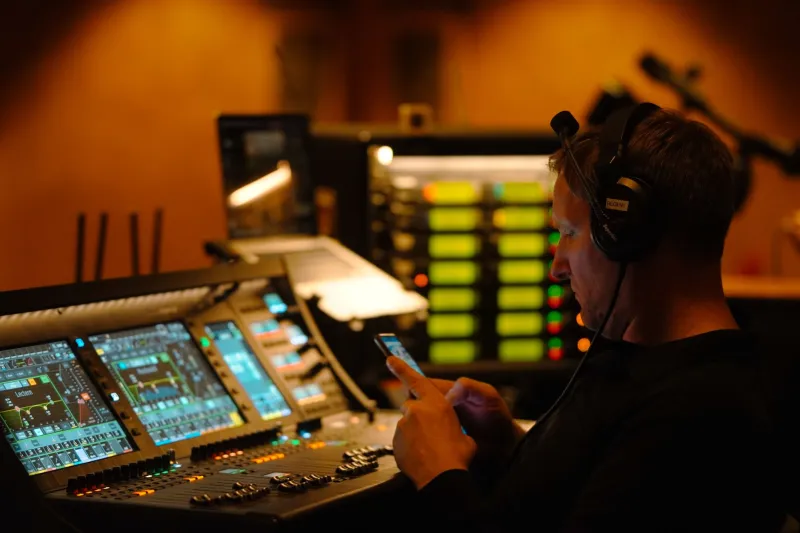
There's a well-worn piece of filmmaking wisdom that goes something like this: viewers will accept imperfect visuals, but they'll abandon you the second the audio falls apart. It sounds like an exaggeration until you actually test it. Put on a film with slightly soft focus and most people barely notice. Now play something with muffled dialogue or a buzzing room tone. Watch how fast people reach for the remote.
Sound is the invisible half of visual storytelling — and that invisibility is exactly the problem. When it's working, nobody talks about it. When it isn't, everyone feels it, even if they can't name why.
The Cognitive Science of Why Sound Hits Different
Here's something that might reframe how you think about this: humans process audio and visual information through different neurological pathways, but sound has a faster, more direct line to emotional response. It's why a horror film score makes your pulse spike before anything scary appears on screen. It's why a familiar song in a movie trailer can make you tear up before you've seen a single frame of the actual film.
Sound doesn't just accompany the image — it tells your brain how to feel about the image. Change the music under a scene and you change the emotional meaning of everything in it. This isn't a trick. It's just how human perception works. And it means that a creator who treats sound as an afterthought is essentially handing over half their storytelling toolkit without using it.
Case Study: What Bad Audio Actually Costs
Consider the early landscape of YouTube documentary content. In the mid-2010s, there was a wave of beautifully shot independent documentaries that gained traction on the platform — stunning cinematography, compelling subjects, real production effort. A significant portion of them stalled out in audience retention metrics not because the stories were weak, but because the interview audio was muddy. Wind noise. Room echo. Inconsistent levels between subjects. Viewers would watch two or three minutes, hit a particularly rough audio patch, and leave.
Meanwhile, some of the most-watched documentary content of that era was shot on comparatively modest cameras but featured clean, well-mixed audio. The viewing experience felt professional even when the visuals were clearly low-budget. Audiences stayed.
This pattern shows up across formats. Think about the early seasons of some beloved indie podcasts that crossed over into video — the ones that built massive audiences on audio quality and storytelling rhythm long before they had the budgets for slick production design. Their listeners trusted them because the sound felt intentional and clean. That trust transferred.
The Three Layers Most Creators Neglect
When people talk about "audio," they often mean dialogue clarity — making sure you can understand what people are saying. That's necessary, but it's just the foundation. There are two more layers that separate good sound from great sound.
Room tone and ambience — the subtle environmental audio that makes a space feel real — is something most non-audio people never consciously notice until it's missing or wrong. A scene shot in a kitchen that sounds like it was recorded in a padded studio feels subtly off in a way viewers can't articulate. They just feel slightly disconnected from the story. Recording room tone on set and using it in post is a small habit with an outsized impact on immersion.
Music selection and placement is where a lot of indie creators make their most costly mistakes. The temptation is to find something that sounds cool and drop it under a scene. But music that isn't calibrated to the emotional arc of a scene — even beautiful music — creates friction. It pulls attention toward itself rather than deepening the moment. The best music choices in film and TV often go completely unnoticed by viewers because they're doing their job perfectly: serving the story rather than commenting on it.
Practical Upgrades That Don't Require a Big Budget
You don't need a full post-production sound suite to make meaningful improvements. Here's where to start:
Invest in a decent lav mic before upgrading your camera. A $200 lavalier microphone will do more for your perceived production quality than a $1,500 lens upgrade in most dialogue-heavy formats. Clean source audio is the single highest-leverage improvement most small-budget creators can make.
Learn iZotope RX or a comparable noise reduction tool. Even a basic version of iZotope's audio repair software can rescue footage that would otherwise be unusable. HVAC noise, light hum, inconsistent room tone — these are fixable in post if you know the tools. It's a few hours of learning that pays off on every project afterward.
Use reference tracks when mixing. Take a film or show with audio you admire and use it as a sonic benchmark while you mix your own work. Compare levels, frequency balance, and the overall feel. Your ears calibrate to what they hear most, and if you're only listening to your own work in isolation, you lose perspective fast.
Budget time for sound, not just money. Even with zero dollars to spend on audio post-production, giving sound design dedicated time in your editing process — rather than rushing it at the end — produces measurably better results. Most creators treat audio as the last step before export. Flip that. Give it the same creative attention you give your visual edit.
The Mindset Shift
The real issue isn't technical — it's conceptual. Most visual creators think in images first and sound second, if at all. That hierarchy is deeply embedded in how filmmaking is taught, discussed, and glamorized. Nobody's putting the sound designer on the magazine cover.
But the creators who consistently produce work that resonates — that audiences finish, share, and come back to — are almost always the ones who think in terms of the full sensory experience. They're asking "what does this scene sound like?" with the same rigor they ask "what does this scene look like?"
That shift in thinking doesn't cost anything. It just requires deciding that sound is part of your creative vision, not a technical checkbox at the end of the process.
Start there. The rest gets easier.