Human First: Why the Rise of AI Content Is Actually Good News for Real Creators
The Flood Nobody Asked For
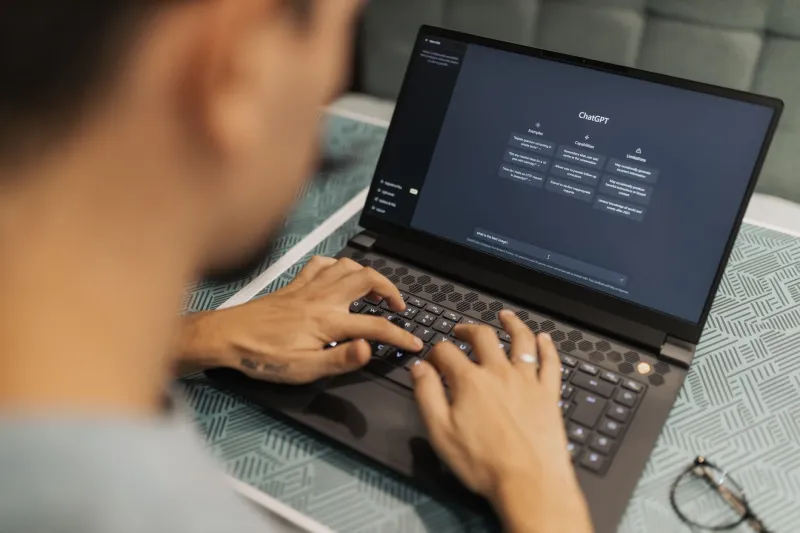
Scroll through YouTube for ten minutes. Browse TikTok for five. Open up Spotify's new releases on a Tuesday. You'll notice something pretty quickly — there is a lot of content out there. And a growing chunk of it has that particular flavor of smooth, frictionless, weirdly hollow output that comes from a machine doing the heavy lifting.
AI-generated videos, AI-written scripts, AI-composed music, AI-voiced narration. The tools got good fast, and a lot of people ran with them. You can't really blame them — the economics are hard to argue with. But here's the thing nobody's talking about loudly enough: the more that stuff floods the zone, the more a genuinely human creative voice stands out like a flare in the dark.
For anyone building a creative career or a production practice in entertainment right now, that's not a threat. That's an opportunity.
What AI Actually Does Well (And Where It Falls Apart)
Let's be honest about the tools, because dismissing AI entirely is just as naive as surrendering your creative identity to it. Generative AI is genuinely impressive at certain tasks. It can draft outlines, generate visual concepts quickly, iterate on copy, produce rough cuts of music beds, and handle the kind of volume work that used to eat up hours of a creative's time.
For production teams working on tight deadlines — which is basically every production team — those capabilities are real. Script coverage, mood board generation, subtitle drafts, marketing copy variations. AI handles that kind of throughput without complaining.
But here's where the wheels come off. AI doesn't have a point of view. It doesn't have the specific, weird, lived-in perspective that makes a documentary feel like it was made by a person who actually cared about the subject. It doesn't know why a particular camera angle in a particular neighborhood means something emotionally. It can't replicate the creative friction that happens between a director and a DP who've worked together for years and developed a shared visual language.
Audiences feel that absence, even when they can't name it. There's a reason so many AI-generated videos rack up views and then vanish — they don't build the kind of loyal audience connection that sustains a creative career.
Authenticity Isn't a Buzzword — It's a Business Advantage
The entertainment industry has been chasing "authentic" storytelling as a marketing angle for years, but the AI moment is making it a genuine differentiator rather than just a talking point. When everything around you is algorithmically smooth and personality-free, the rough edges of a real human perspective become interesting by contrast.
Think about the creators and filmmakers who've built serious followings in the past few years. What they share isn't production value — some of the most compelling work coming out of independent spaces is shot on modest gear. What they share is a distinctive voice. A perspective you can't mistake for someone else's. A way of seeing the world that feels specific to them.
That specificity is what AI can't generate, because it can only recombine what already exists. Your particular combination of influences, experiences, failures, obsessions, and aesthetic instincts? That's the thing that's actually scarce right now.
How to Use AI Without Losing Yourself
None of this means ignoring the tools. The smartest approach treats AI the way a good craftsperson treats power tools — useful for certain jobs, not a replacement for the skill and judgment behind the work.
Here's a practical framework that works for a lot of creatives navigating this:
Use AI for the scaffolding, not the structure. Let it draft outlines, generate research summaries, or produce reference material. Then bring your own thinking to the actual creative decisions.
Set clear non-negotiables. Decide in advance which parts of your process stay human. For a lot of filmmakers, that's the story concept, the casting decisions, and the final edit. For writers, it's the voice and the core argument. Know where your fingerprints need to be.
Iterate fast, then slow down. AI is great for rapid ideation. Use it to generate ten directions quickly, then spend real time choosing one and developing it with intention. The selection and development is where your creative identity lives.
Be transparent when it makes sense. Audiences are getting better at detecting AI involvement, and in many creative contexts, being upfront about how you use it builds trust rather than eroding it. The creators who are honest about their process tend to come across as more, not less, credible.
The Long Game for Creative Careers
Here's the perspective worth holding onto as AI tools keep evolving and the content landscape keeps getting noisier: audiences have always been able to tell when something was made with genuine care and when it wasn't. The technology changes the surface, but it doesn't change that fundamental human capacity for connection.
The creators and production companies that will matter five years from now are the ones building something that couldn't have come from a prompt. A body of work with a clear point of view. A creative identity that audiences recognize and return to because it means something specific to them.
AI is a genuinely useful tool in that process. But it's a tool, not a strategy. The strategy is still the same one it's always been: figure out what you have to say, find the most honest and compelling way to say it, and keep showing up.
In a world drowning in generated content, that's the rarest thing going. And rare things tend to be worth something.