Stop Burying the Gold: Why Your Strongest Scenes Are Getting Lost in the Edit
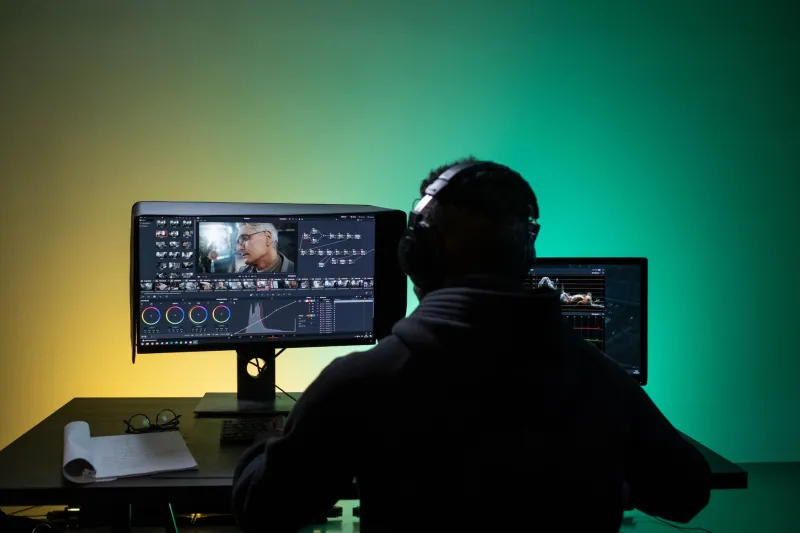
There's a particular kind of frustration that hits in the editing room — the kind where a project feels finished but somehow doesn't land the way you imagined it would. You've got the footage. The music is right. The pacing seems clean. But something is off, and you can't quite name it.
A lot of the time, the culprit isn't what's in the cut. It's what got compressed.
The Seductive Logic of the Montage
Montages are genuinely useful tools. Nobody's arguing against that. When you need to communicate the passage of time, establish a mood, or move an audience through a series of events without grinding the story to a halt, a well-assembled sequence can do that work elegantly.
The problem is that montages are also incredibly easy to reach for when you're not sure how to handle a moment. They feel productive. You're using the footage. You're moving things forward. You're showing instead of telling. And in the process, you're sometimes taking a scene that deserved five minutes of screen time and folding it into forty-five seconds of B-roll set to a licensed track.
That's not editing — that's avoidance with a soundtrack.
What Gets Lost in Compression
Here's the thing about your most emotionally resonant material: it almost always needs room. Not padding, not filler — room. Space for the audience to sit with what they're seeing, to form an attachment, to feel something before the story moves on.
When you compress a genuinely powerful moment into a montage, you're essentially asking your audience to care deeply about something you've only shown them for three seconds. That's a hard ask. Audiences aren't ungenerous, but they do need a little time to invest.
Think about the scenes you remember from your favorite films. Rarely are they montage sequences. They're usually single, sustained moments where the camera just stays — a conversation that lingers past comfort, a reaction shot that goes on a beat longer than expected, a location that the film lets you actually inhabit rather than flash past. Those moments feel important because the filmmaker treated them as important.
If your edit is rushing past something, your audience will assume they should too.
Recognizing the Buried Scene
So how do you actually spot this in your own work? It's harder than it sounds, because the instinct to compress is usually invisible to the person doing the compressing. A few questions that help:
Did you shoot more of this than you used? If you spent three hours capturing a particular moment and edited it down to a ten-second clip in a montage, that's worth examining. Why did you spend three hours there? What were you chasing? Is any of that still alive in what made the cut?
Does this moment have its own emotional arc? A montage works when each element is roughly equal in weight. But if one piece of your sequence has a beginning, a middle, and an end — if something changes within it — then it's probably not montage material. It's a scene.
Are you using music to do emotional heavy lifting? This is a big one. There's nothing wrong with music in a sequence, but if you find yourself thinking "this will work once the score kicks in," you might be using audio to compensate for footage that hasn't been given enough room to work on its own terms.
Would you be embarrassed to show just this footage without the music? If the answer is yes, that's information. Either the footage isn't strong enough to carry its weight — or you haven't let it try.
The Spotlight Test
Here's a practical exercise worth running on any project before you lock picture: pull the individual elements of your montages out and watch them in isolation. No music, no intercutting, just the raw footage played straight through.
Some of it will feel flat without the context of the sequence. That's fine — it belongs in the montage.
But occasionally, you'll find something that holds on its own. Something where the performance or the image or the moment has enough going on that it doesn't need the surrounding material to give it meaning. When that happens, you've found a buried scene.
The next step is figuring out where it actually lives in your story. Sometimes that means restructuring. Sometimes it means cutting something else to make room. Neither of those is fun, but both of them are part of the job.
Giving Moments Permission to Matter
There's a broader creative philosophy underneath all of this, and it's worth naming directly: as a filmmaker or editor, you are constantly making decisions about what deserves attention. Every cut is a signal to your audience about what matters and what doesn't.
When you fold something meaningful into a quick sequence, you're implicitly telling your audience not to invest too heavily. And audiences, being smart, will take that cue. They'll move through the moment without feeling it, and then they'll wonder later why the film didn't quite connect.
The fix isn't complicated. It's just uncomfortable, because it usually means slowing down in places where the instinct is to speed up. It means trusting that a quiet, sustained moment can hold an audience's attention without the safety net of fast cuts and a driving beat.
Your best material is probably already in your footage. The question is whether you're willing to give it the screen time it actually earned.
That's not a technical problem. It's a confidence problem — and it's one every filmmaker has to work through on their own terms.