Borrow the Blueprint: How Smart Creators Study Other People's Work to Find Their Own Voice
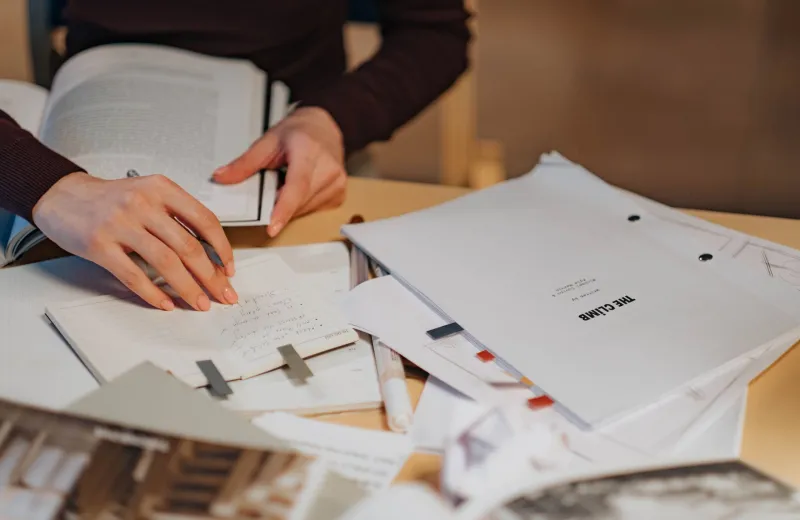
Every film school in the country teaches the same assignment at some point: watch a scene from a master filmmaker, then go recreate it. Shot for shot. Same blocking, same lens choices, same pacing. Not to screen it publicly — just to understand how it was built.
This is not plagiarism. This is education. And the distinction matters more than most working creators realize.
The conversation around "stealing" in creative industries tends to collapse into two camps: the romantic idea that truly original work springs fully-formed from pure individual genius, and the cynical take that everything is derivative so nothing matters. Both of those are wrong, and both of them are useless to someone actually trying to grow.
The more interesting and practical truth sits in the middle: conscious, intentional study of existing work is one of the most accelerated paths to developing a creative voice that's genuinely your own.
The Difference Between Copying Content and Borrowing Technique
This is the line that matters, and it's worth being precise about it.
Copying content means taking someone's story, their characters, their specific creative expression — the thing they actually made — and presenting it as yours. That's theft, legally and ethically, and it produces nothing of value because it doesn't require you to understand anything. You're just moving someone else's furniture around.
Borrowing technique is completely different. Technique is the how — the structural approach, the visual grammar, the compositional logic underneath the work. Technique doesn't belong to anyone. It can't be copyrighted. And studying it closely enough to replicate it is how you eventually internalize it and make it your own.
Quentin Tarantino didn't invent nonlinear storytelling. He studied it obsessively — in Hong Kong crime films, Italian westerns, American pulp fiction — until he understood it so completely that he could deploy it in a way that felt entirely his. Pulp Fiction isn't a copy of anything. But it's built on a foundation of very deliberate technique borrowing.
The same pattern shows up everywhere you look.
Case Study: What Scorsese Learned From Cassavetes
Martin Scorsese has been open for decades about his debt to John Cassavetes, the indie filmmaker who pioneered a raw, improvisational approach to drama in the 1960s. Cassavetes worked with handheld cameras, overlapping dialogue, and a loose naturalism that felt genuinely foreign to mainstream Hollywood at the time.
Scorsese watched those films. He studied them. He understood what Cassavetes was doing structurally — how the camera placement created intimacy, how the editing rhythm built anxiety — and he carried those techniques into his own work. But nobody watches Mean Streets and thinks they're watching a Cassavetes film. The voice is completely different. The content is completely different. The technique, filtered through Scorsese's own obsessions and sensibility, produced something new.
That's the process. Study → internalize → transform.
The Music Industry Does This Better Than Anyone
In music, the practice of conscious imitation has always been more openly acknowledged, partly because the tools for studying it are more accessible. Musicians learn by transcribing other people's solos, by playing along to records, by deconstructing chord progressions.
The Beatles learned to write songs by covering American R&B records until they understood the architecture of a hook. Then they wrote their own hooks. Jack White has talked extensively about studying the Delta blues tradition — not to recreate it, but to understand what made it emotionally powerful, and then apply that understanding to completely different musical contexts.
The result in both cases: music that sounds like nobody else, built on a foundation of rigorous study of everyone who came before.
This is also why the "everything is a remix" conversation that runs through creative culture is actually a useful frame rather than a depressing one. Every creative act is in dialogue with what came before it. The question isn't whether you're influenced — you are, inescapably — but whether you're conscious about it.
How to Actually Do This: A Practical Framework
Studying existing work for technique is a skill, and like most skills, it improves with a structured approach.
Deconstruct before you consume. When you watch a film or a music video or look at a design that hits you in a particular way, stop and ask: what specifically is producing this feeling? Is it the color palette? The pacing? The way the camera moves? The sound design underneath the dialogue? Name it precisely, because vague admiration doesn't teach you anything.
Recreate to understand. This is the film school assignment, and it works in every discipline. Pick a scene, a sequence, a composition, a production technique — and build a version of it yourself. Not to release it. Just to understand the decisions that went into it. You will learn things in the making that you could never learn from watching.
Track your influences deliberately. Keep a running document — a swipe file, a mood board, whatever format works for you — of the specific techniques you're studying. When you pull from them in your own work, note it. This keeps you conscious of the process and prevents unconscious copying, which is where the ethical problems actually live.
Cross-pollinate across disciplines. The most interesting technique borrowing often happens across medium boundaries. Filmmakers who study graphic design composition make different camera choices. Music producers who study film editing approach arrangement differently. The further the source material is from your own discipline, the more transformative the influence tends to be.
On Originality and What It Actually Means
Here's the thing about originality: it's almost never about inventing something from scratch. It's about combining things in proportions and configurations that haven't been combined quite that way before.
Your creative voice — the thing that makes your work recognizably yours — is the sum total of everything you've absorbed, filtered through your specific experiences, instincts, and obsessions. You can't shortcut that process. But you can accelerate it by being intentional about what you study and why.
The creators who develop the most distinctive voices tend to be voracious, specific, and honest about their influences. They don't pretend to have invented the techniques they use. They understand where those techniques came from, what problems they were originally designed to solve, and how to repurpose them for new contexts.
That's not stealing. That's craft. And it's been the engine of creative progress in every discipline, in every era, without exception.
So go find the work that moves you, take it apart, and figure out how it was built. Your own voice is waiting on the other side of that process.