When Less Is Actually More: Why the Best Creative Work Often Comes From Having Nothing
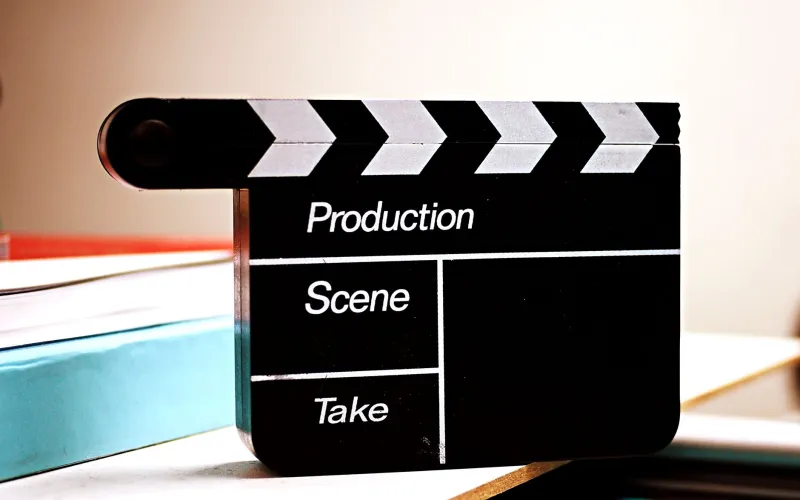
Here's something nobody tells you when you're scraping together your first real project: the creators who have everything at their disposal often produce the least interesting work. Unlimited budgets, sprawling crews, the best gear money can rent — and somehow the result feels hollow. Meanwhile, someone shooting in a converted garage with a borrowed camera and a three-person team makes something that stops you cold.
That's not a coincidence. That's a pattern.
Call it the pressure-diamond effect. When you can't afford to be lazy, you get sharp. When you can't buy your way out of a problem, you think your way out of it. And what comes out the other side is almost always more you than anything a fat budget could've produced.
The Desert Teaches You What You're Made Of
Think about what a desert actually does to the people who cross it. It strips everything unnecessary away. You carry only what you absolutely need because everything extra costs you. Your decisions get cleaner. Your instincts get louder. You stop second-guessing and start committing.
Creative constraints work the same way. When you only have one location, you stop agonizing over which of seventeen options to pick — you figure out how to make that location sing. When your budget won't cover a licensed score, you either find a hungry composer willing to collaborate or you discover that silence and ambient sound tell the story better anyway. When you have three days to shoot instead of three weeks, you stop fussing over perfect and start capturing real.
Some of the most talked-about indie films of the last two decades were born from exactly this kind of scarcity. Tangerine, Sean Baker's 2015 film about trans sex workers in Los Angeles, was shot entirely on iPhone 5S cameras with an anamorphic lens adapter. The constraint wasn't a gimmick — it was the reason the film feels so visceral and alive. Baker couldn't hide behind expensive cinematography. He had to get close, stay honest, and trust his story. The result earned him a place in the Criterion Collection conversation.
Resourcefulness Is a Learnable Skill — But Only If You Practice It
Here's the uncomfortable part: resourcefulness doesn't kick in automatically just because things get hard. You have to build the muscle. And the only way to build it is to regularly put yourself in situations where you can't throw money or time at the problem.
A lot of working creators in the US have started doing this intentionally. Filmmakers are setting themselves arbitrary rules before a project begins — one location, no score, natural light only. Writers are giving themselves 48-hour drafts with no revision passes. Designers are limiting themselves to two typefaces and a restricted color palette. Not because they have to, but because they know what happens when they do.
The creative community around events like the 48 Hour Film Project (which runs in cities across the country, from Atlanta to Seattle) has been proving this for years. Teams that would normally spend weeks in pre-production are handed a genre, a prop, a line of dialogue, and a deadline. The results are wildly uneven — but the standout films almost always share one quality: they feel decided. There's no hedge, no middle ground. The constraints forced a point of view.
What Unlimited Resources Actually Cost You
This is worth sitting with for a second. When you have everything available to you, every decision becomes a negotiation. You can always add another shooting day, tweak the color grade one more time, re-record the voiceover with a slightly different inflection. The project never has to be finished because it can always be better.
Constraints eliminate that trap. They give you a natural finish line. They tell you when done is done.
There's also a deeper creative cost to abundance that doesn't get talked about enough: when resources are unlimited, work tends to converge toward the mean. You have the budget for the obvious choice, so you make it. You can afford the safe route, so you take it. Constraints push you off the beaten path not because you're being bold, but because the beaten path isn't available to you.
Some of the most distinctive visual styles in American independent cinema came directly from this dynamic. Robert Rodriguez famously made El Mariachi for around $7,000, teaching himself filmmaking by solving problems in real time on a shoestring. The quirks that came from those solutions — the visual energy, the raw kineticism — became his signature. Give him a studio budget for that film and you might get something technically smoother and creatively far less interesting.
How to Build Constraints Into Your Own Process
You don't have to wait for a budget crisis or a collapsed timeline to get these benefits. You can engineer the conditions deliberately. Here's how working creators are doing it:
Set a hard deadline and honor it. Not a soft goal — a real, immovable deadline with actual stakes attached. Tell someone. Post it publicly. Make it real.
Restrict your toolkit before you start. Pick your tools for the project and commit to them. One camera body. One lens. A two-software workflow. The limitation forces mastery instead of browsing.
Limit your location options early. Instead of scouting ten spots, scout two. Choose one. Then figure out everything that location can give you.
Give yourself a budget floor, not just a ceiling. Decide you'll spend less than you think you need. Not nothing — but less. See what that pressure produces.
Build in a kill switch for options. At some point in every project, stop accepting new ideas. Freeze the concept. Let execution be the only remaining variable.
Scarcity as Creative Philosophy
The most interesting shift happens when creators stop treating constraints as obstacles and start treating them as tools. That's when the work gets genuinely surprising — to the audience and to the creator making it.
The desert metaphor holds all the way through. The Sahara doesn't apologize for being harsh. It just is what it is. And the people who learn to move through it don't curse the heat and the sand. They figure out how to read the landscape, how to move efficiently, how to find water where nobody else thought to look.
Your next project's limitations aren't working against you. They might be the most useful thing you've got.