No Signal, No Noise: How Creative Isolation Unlocks Your Most Original Work
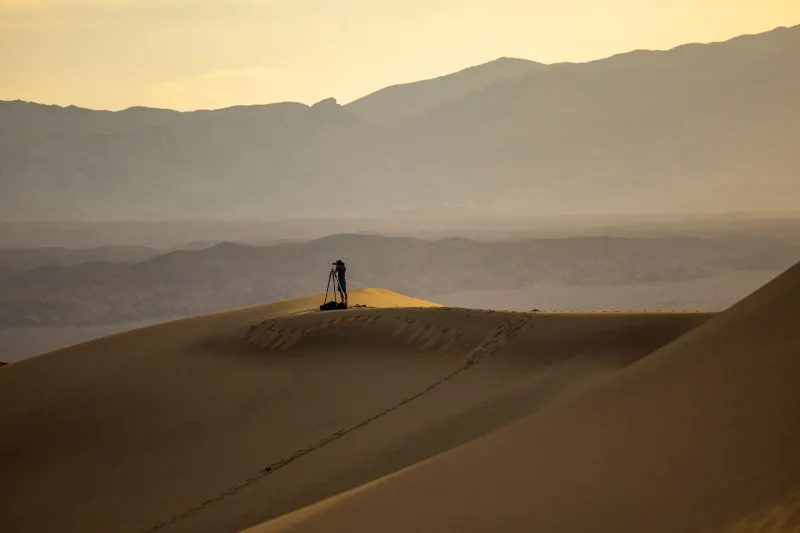
There's a version of creative success that looks like being plugged in at all times — algorithm feeds refreshed, industry newsletters queued, Slack channels buzzing. And then there's the version that actually produces something nobody's seen before.
Those two versions don't usually live in the same place.
Some of the most distinctive work to come out of American independent film, underground music, and graphic design didn't emerge from cultural hubs or well-connected studios. It came from people who were, by circumstance or by choice, cut off. Isolated. Working without a constant stream of references telling them what good was supposed to look like this season.
That's not a coincidence. That's a mechanism.
The Reference Trap Nobody Talks About
When you're constantly consuming — watching what's trending, scrolling through reels of other people's work, absorbing what's getting buzz — you're not building your creative instincts. You're calibrating them to someone else's standard.
This happens quietly. You start making small adjustments. A color grade that feels familiar because you've seen it everywhere. A story structure that mirrors something that got picked up last year. A visual rhythm that feels right because it matches what your feed has been showing you for months.
None of it is intentional plagiarism. All of it is creative drift.
The problem isn't inspiration. Influence is healthy. But there's a threshold — and most working creators blow past it without noticing — where influence stops feeding your work and starts steering it. At that point, you're not making your thing. You're making a well-executed version of someone else's.
What Isolation Actually Forces You to Do
When you strip away the external input, something uncomfortable happens: you have to go inward.
You can't reach for a reference. You can't check what's working on the festival circuit this year. You're stuck with what you actually know, what you actually believe, and what you actually find interesting — which turns out to be exactly the raw material that makes work feel specific and irreplaceable.
Think about how many artists built their most recognizable aesthetic in conditions that were, by most measures, limiting. Terrence Malick spent years stepping away from Hollywood before returning with work that looked like nothing else in mainstream cinema. Bon Iver's Justin Vernon recorded his debut album alone in a cabin in rural Wisconsin during a Wisconsin winter, with almost zero outside input. The result was one of the most distinctive folk records of the 2000s — not because it followed a template, but because there was no template available.
The constraint wasn't the obstacle. The constraint was the point.
You Don't Have to Move to the Desert
Here's the practical version of this for working creators who aren't about to rent a cabin in the woods for three months.
Creative isolation doesn't have to be geographic. It can be temporal, social, or informational.
Temporal isolation means carving out blocks of time where you're not consuming anything related to your field. No industry podcasts. No competitor work. No trend reports. Just you, your project, and the ideas already living inside it. Even two to three weeks of this can shift the direction of a project in ways that feel surprising.
Social isolation means being intentional about whose opinions you let in during early development. The early stage of any project is fragile. Sharing it too widely, too soon, invites feedback calibrated to other people's taste — not to the vision you're trying to develop. Protect the work before it has its legs.
Informational isolation means actively choosing not to research what's already been done before you've committed to your own take. This one feels counterintuitive, but it works. If you research first, you'll unconsciously position your work in relation to existing examples. If you develop your instinct first, you'll position your work in relation to your own vision — and then you can research to refine it.
Building Your Own Creative Desert
The goal isn't to become hermetically sealed or to pretend outside influence doesn't exist. It's to create the conditions where your most authentic instincts have enough space to surface before the external noise drowns them out.
A few ways to do that intentionally:
Set a reference embargo on new projects. For the first week or two of any new creative project, don't look at comparable work. Let yourself build from the inside out before you start pulling from the outside in.
Create a consumption audit. Track what you're taking in for one week — feeds, videos, podcasts, newsletters. Then ask yourself: how much of this is actually feeding my work versus just filling time? Cut aggressively.
Work in unfamiliar environments. You don't need to go far. A library you've never been to, a coffee shop in a neighborhood you don't usually visit, a park with your notebook and no headphones. Unfamiliar spaces disrupt autopilot and force genuine observation.
Give your rough ideas room to be wrong. The biggest killer of original thinking is the early pressure to make it good. Original ideas often start ugly. Isolation gives them space to exist before they get polished into something more conventional.
The Counterintuitive Competitive Advantage
Here's the part that should land for anyone building a creative practice with longevity in mind: in a content landscape where almost everyone has access to the same references, the same tools, and the same trend data, the creator who knows how to go inward has a genuine competitive advantage.
That's rare. And it's getting rarer.
The most valuable thing you can offer as a creator isn't a well-executed version of what's already working. It's something that couldn't have come from anywhere else — a specific point of view, a distinctive aesthetic, a voice that's been developed in relative quiet rather than assembled from pieces of what's already popular.
The creative desert isn't a punishment. For anyone serious about building a body of work that lasts, it might be the most productive address you ever occupy.